
post

Why Schools Struggle to Retain Teachers Without the Right Placement Fit

Even when schools improve pay, expand benefits, and invest in teacher support, teachers still leave. Roles get filled and timetables set, yet within a year or two, the cycle starts again. It’s quite a pain to deal with, isn’t it?

The problem isn’t your effort, funding, or goodwill. It’s just that the role was never the right fit in the first place. Many schools focus on filling positions quickly, ignoring whether a teacher’s strengths and style match the classroom.

This guide looks at why placement fit plays such a decisive role in teacher retention. You’ll see where traditional hiring practices fall short, and how schools can reduce turnover by getting alignment right from the start.

Let’s dive in.

The Cost of Teacher Turnover in Australian Schools
The Cost of Teacher Turnover in Australian Schools

When a teacher leaves, schools don’t just replace the role. They restart an expensive cycle of recruitment, onboarding, and adjustment. That means more time, more money, and more disruption for students.

Over time, this frequent turnover also weakens staff morale and erodes trust within the school community. Let’s look at the cost of teacher turnover in more detail:

  • Recruitment and Training: Replacing a teacher can cost a school between $12,000 and $30,000, depending on district size, according to Learning Policy Institute. This includes advertising roles, reviewing applications, interviewing candidates, and onboarding new staff, plus the administrative time involved.
  • Impact on Students: High turnover means students have to adjust to new teaching styles mid-term. It also slows down their learning momentum and creates foundational gaps that can build up over time.
  • Resource Strain: Schools with turnover above 20% often spend more on recruitment, which can leave less for classroom resources, technology, and professional development.

These direct costs are only a part of the picture. The longer-term effects on school culture, staff morale, and student outcomes often take years to reverse.

What Placement Fit Actually Means for Teachers

Placement fit is about how well a teacher’s strengths and teaching style match the needs of your classroom, school values, and community. It goes beyond degrees and certifications to consider whether the teacher will actually thrive in your specific environment.

For example, a science teacher who excels in project-based, inquiry-driven schools may struggle in traditional test-focused environments. Meanwhile, a teacher without every qualification on paper can still flourish if their approach aligns with your classroom culture.

The key here is to identify the good fits before they start. This might be a recent graduate who trained in a similar environment, or an experienced teacher whose methods match your school’s philosophy.

Getting this right upfront helps teachers settle in faster and reduces early turnover.

Why Traditional Hiring Misses the Mark

Degrees and experience show what a teacher knows, but not how they teach, interact with students, or fit your school culture. When schools overlook these gaps, consequences show up quickly: classrooms struggle, staff morale dips, and early departures become a costly pattern.

Many hiring mismatches come down to two often-overlooked factors.

Focusing on Qualifications Over Compatibility
Focusing on Qualifications Over Compatibility

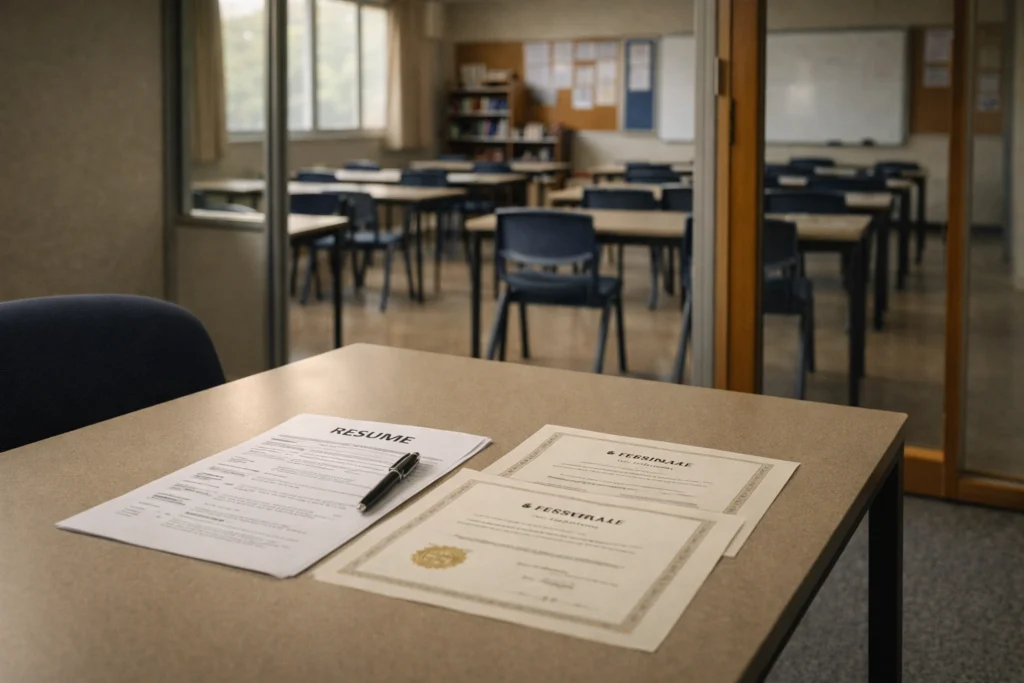
Many schools prioritise qualifications and treat personality as secondary. A teacher might have excellent subject knowledge. They might fumble communication with parents or freeze when lesson plans need sudden adjustments.

These compatibility issues only surface weeks into the term, after contracts are signed and students have already adjusted to a new teacher. By then, finding a replacement disrupts the classroom, and the cycle repeats if the hiring process doesn’t change.

Ignoring Teaching Style Alignment

Even highly qualified teachers can struggle if their teaching style doesn’t match the school’s approach. A structured, routine-focused teacher in a progressive, student-led environment feels out of place. So does a flexible, improvisation-heavy teacher in a traditional, curriculum-strict school.

When teaching philosophy clashes with school culture, stress accumulates on both sides; teachers feel unsupported, and administrators feel frustrated. The result? Burnout, early exits, and costly disruptions to classroom stability.

Schools that assess teaching style during hiring through classroom observation trials, collaborative teaching sessions, or values-based interviews often see lower turnover. These steps take a little extra time upfront, but prevent mismatches that can derail entire terms.

Bottom line: Hiring decisions shouldn’t stop at qualifications. Assessing interpersonal skills, teaching style, and cultural fit upfront reduces early turnover, supports staff morale, and helps teachers succeed from day one.

What Schools Miss Between Hiring and the First Term

What schools expect from a new teacher doesn’t always match what the teacher expects from the role. When the reality of day-to-day responsibilities, workload, and classroom demands differs from the picture painted during interviews, that gap tends to surface quickly.

Most of the time, it shows up within the first term, after contracts are signed, timetables are locked in, and relocation decisions are already made. By then, schools are reacting to problems instead of preventing them.

Two issues show up again and again during this overlooked window.

Matching Subject Expertise With Actual Classroom Needs

Matching Subject Expertise With Actual Classroom Needs

New teachers often need to take on different subjects on top of their own. This mismatch forces them to prepare unfamiliar content nightly, doubling their workload while reducing lesson quality and personal confidence.

Picture a biology specialist suddenly assigned to teach chemistry and physics because the school needed “a science teacher.” Instead of refining lessons, they spend every evening revisiting material they haven’t studied in years.

This isn’t a capability issue; it’s a planning one. When schools hire broadly but timetable narrowly, the strain appears almost immediately in the first term.

Auditing actual classroom needs before matching candidates helps ensure specialists teach their specialisation, not just cover gaps.

Understanding Workload Expectations From Day One

A Monash University survey shows that workload and the emotional demands of teaching are major reasons new teachers consider leaving early.

Just think about it. A teacher who accepts a role expecting to teach five classes a day might discover they’re also coordinating events, running clubs, and attending frequent meetings. These “invisible” responsibilities can add 10 to 15 hours per week beyond classroom teaching. Pressure that wasn’t obvious during recruitment conversations.

When these expectations aren’t clearly discussed upfront, frustration builds fast. By the first term, teachers are already questioning whether the role matches what they signed up for.

That’s why these conversations need to happen before contracts are finalised, not after teachers have relocated or left previous positions.

When Schools Get Placement Right
When Schools Get Placement Right

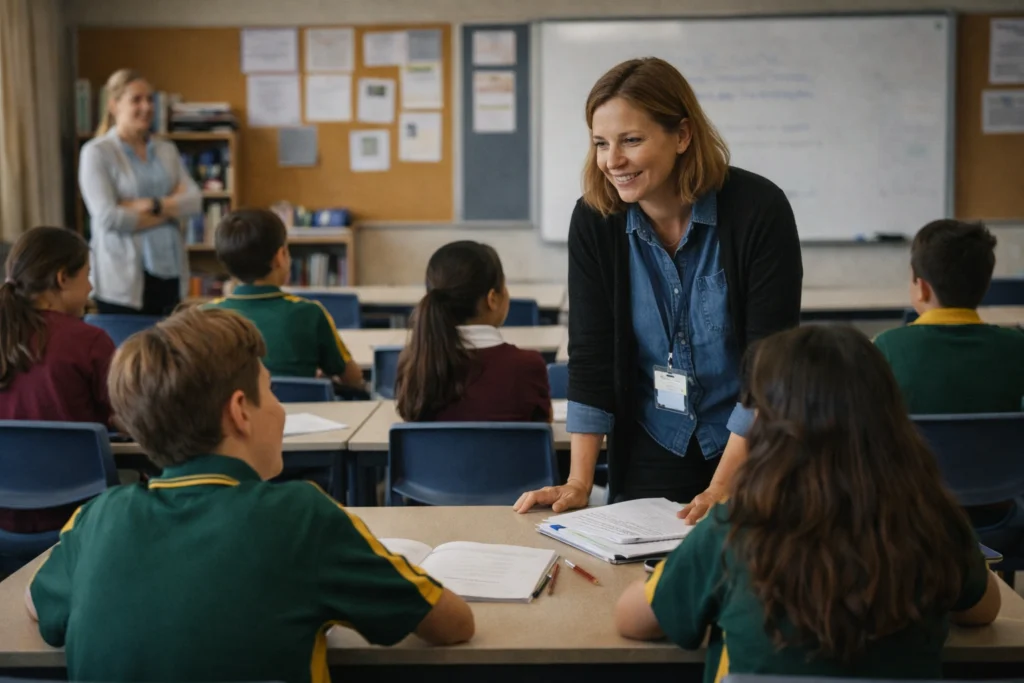
When staff stay longer, schools build stronger teaching cultures, stabilise classroom environments, and develop the kind of word-of-mouth referrals that attract better applicants each year. Often, these are candidates who already know what to expect before they even apply.

Think about it from a teacher’s point of view. You’re choosing between two roles. One school offers a higher salary, but staff turnover is constant, and colleagues rarely stay beyond a year or two. The other pays a little less, but most teachers stay until the end of the school year, and many return year after year.

If you’re thinking long term, the choice is usually clear. Stability tells you far more about a school than a job ad ever will.

That’s why schools that invest an extra two weeks in thorough placement processes often save themselves months of disruption caused by poor hires.

Teacher Retention Starts With Getting Placement Right

Teacher retention starts with placement decisions that prioritise fit, clarity, and long-term compatibility. When teachers feel aligned with their school from the outset, they’re more likely to stay, perform well, and contribute to stable, high-performing teaching teams.

Schools that treat placement as a strategic decision rather than an administrative step see fewer early exits, stronger staff morale, and better continuity for students. The payoff compounds over time. You get reduced recruitment pressure, more consistent classroom environments, and a reputation that attracts better candidates year after year.

And if you’d like support designing a placement process that prioritises fit from day one, get in touch with us. We’d be happy to help.

post

How CRTs Can Build Rapport Quickly

Walking into a new classroom as a Casual Relief Teacher (CRT) means you need to build rapport fast with students you’ve never met before. The kids already have a connection with their regular teacher, and now you’re stepping into those shoes on day one.

It might feel overwhelming at first, but it doesn’t have to be. A few simple teacher rapport tips, like learning names quickly and asking the right questions, can help you get the ball rolling on trust right from the start.

In this guide, we’ll cover practical ways to connect with students, use classroom management to build positive relationships, and handle behaviour through connection instead of control.

Ready to turn awkward first days into engaging lessons? Let’s get started.

First Day Wins: Making Instant Positive Connections

Making positive connections on day one starts with three things: learning names, showing genuine interest, and using body language that puts students at ease. When students see that effort early, they’re more willing to engage throughout the lesson. Here’s what that looks like in a real classroom:

Learn Every Student’s Name Fast

Learn Every Student's Name Fast

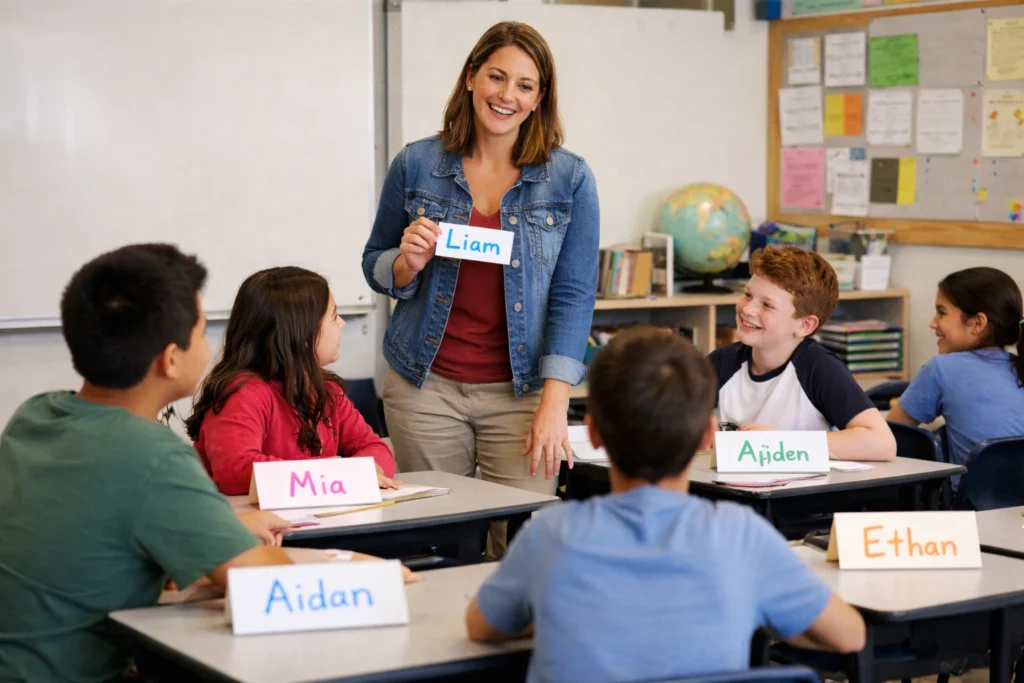
Using a paper register or name cards on desks helps you learn names during the first lesson. You’ll mix up a few names at first (three Olivias in one class will do that to you), but students notice the effort regardless.

Try a name game where each person says an adjective starting with their first letter. It makes introductions fun and memorable. “Adventurous Alex” or “Brilliant Bree” stick in your mind better than just hearing “Alex” or “Bree.”

Calling students by name throughout the day is a sign of respect. Saying “hey, you” or “excuse me” keeps them anonymous. Using their actual name makes them feel seen.

Use Body Language to Encourage Students

Crouching down to eye level when talking to seated students makes you less intimidating. This works especially well in primary school, where the height gap can make you feel like a giant.

Eye contact signals engagement. So look at them and nod along while they speak to communicate that their words have value.

Smiling and looking relaxed also tells the room you’re comfortable being there. That relaxed presence spreads through the room and helps set a steady tone.

Can You Build Trust Through Classroom Management?

Yes, absolutely! Managing behaviour through trust means students actually want to cooperate instead of resisting your authority. Keeping calm when they’re pushing boundaries isn’t always easy, but it’s how you earn respect in the classroom.

So set clear boundaries during your first lesson. Explaining your classroom rules calmly helps students understand what you expect without feeling controlled.

For example, tell the class you expect hands up before anyone speaks, or that students need to stay in their seats unless they have permission to move around the room. When you’re clear about these expectations upfront, kids know where they stand.

Then focus on reinforcing good behaviour rather than only catching mistakes. Students respond far better when they feel noticed for doing the right thing. Even a simple “I noticed you helped your peer with that maths problem, nice work” makes more impact than you’d think.

How you handle disruptions reveals whether your classroom management actually works. And students watch closely when things go sideways. If you lose your cool, they’ve found your weak spot.

Simple Ways to Engage Students Through Group Work

Simple Ways to Engage Students Through Group Work

A 2025 study published in Frontiers in Psychology found that collaborative learning increases student engagement by encouraging active participation, shared responsibility, and peer interaction.

For relief teachers, group work offers a practical way to create that engagement without extensive lesson preparation. Here are a few strategies that work well:

  • Get Students Moving: Activities like “Find Someone Who” get kids out of their seats and talking around the room. Give students questions like “Find someone who played a sport on the weekend” and let them ask around to discover shared interests. This naturally forms connections you can build on for later activities.
  • Balance Your Pairs: When pairing students up, match quieter ones with confident students so everyone contributes without one person dominating. The quieter learners gain confidence from their peers, while more vocal students learn to listen and give others space.
  • Use Think-Pair-Share: This technique is simple but effective. Give students a question, let them think for 30 seconds, then pair up to discuss before sharing with the class. Everyone gets processing time before jumping into conversation, which helps anxious students participate more comfortably.

Group work strategies like these consistently improve classroom dynamics because students participate more actively when collaborating with peers, not just listening to you at the front.

Connecting with Other Teachers: Why It Helps Your Class

The staff room holds more answers than any lesson plan ever could. Teaching assistants know which students struggle with reading or need fidget tools, information that would take you weeks to figure out on your own. They’ve worked with these kids for months, sometimes years, so they can tell you which students need extra support before problems even arise.

Start by grabbing a coffee in the staffroom and asking about class dynamics. Find out which students work well together and who needs to sit apart. It’s also worth asking whether the regular teacher uses any behaviour management approaches that work particularly well.

Make an effort to introduce yourself to other teachers as well. It shows professionalism and helps you make a good first impression, which increases your chances of being invited back. Schools also tend to remember relief teachers who connect with the team rather than just showing up, teaching, and leaving.

Ask Students Questions That Create Real Conversations

Ask Students Questions That Create Real Conversations

Most relief teachers ask surface-level questions and get one-word answers, so the conversation stalls before it even starts. For example, asking “Did you have a good weekend?” gets a quick “Yeah” and then silence.

Instead, ask open-ended questions like “What’s something you’re proud of lately?” or “What are you working on outside of school?” Questions like these give students room to share more than yes or no.

You can also keep the conversation going naturally by following up on their answers. If a student mentions they’re learning guitar, ask what songs they’re working on or who taught them. This shows you’re genuinely interested and not just making small talk to fill time.

When students feel heard, they open up more in your classroom. You’ll learn what they care about, which helps you connect with them throughout the day and makes building rapport much easier.

Using Connection to Handle Behaviour Issues

Students who feel connected to you are more likely to listen when you address behaviour because they know you respect them. In our experience, the CRTs who get repeat bookings at Victorian schools tend to handle disruptions with calm, private conversations rather than public call-outs.

When you pull a student aside to talk, you preserve their dignity and prevent defensive reactions or power struggles in front of the class. Say a student is talking during instruction. Walk over quietly and ask them to step outside for a quick chat instead of calling them out across the room.

Acknowledge when students improve their behaviour, too. Feedback like this shows that you’re paying attention to their effort and not just their mistakes.

What Happens When You Personalise the Learning Process?

What Happens When You Personalise the Learning Process?

Incorporating examples from students’ lives (like sports, music, or local events) makes the material suddenly click in ways it wouldn’t with generic examples.

For instance, if you know a student loves basketball, use basketball stats in a maths lesson to explain percentages or averages. Abstract concepts become easier to understand because they connect to something students already care about.

Pacing is also important here. If students are struggling with a concept, slow down and break it into smaller steps. For students flying through the work, add a challenge to keep them engaged.

Your Next Step as a Relief Teacher

These rapport-building strategies work best when you use them consistently, not just on your first day at a school. The more you practice asking questions, learning names, and staying patient, the more natural the connection becomes in every classroom.

Start with one or two techniques tomorrow and build from there. You’ll see the difference in how they engage when you make that commitment, and those small wins add up quickly.

For more practical teaching tips and resources, visit Francis Orr. We’ve been supporting teachers since the nineties with insights that help you succeed in any classroom.