
post

What Makes a Teaching Placement Successful Beyond Qualifications

A teaching placement is successful when strong communication, adaptability, and supportive mentoring help teachers grow. In fact, recent research found that mentored teachers showed a 27% higher retention rate compared to those without mentor support during their professional experience.

However, most education degrees focus heavily on pedagogy and content knowledge. They often skip over the daily interactions that truly determine if you’ll thrive in schools across Australia.

In this article, we’ll cover the preparation work that helps you integrate into school communities before you arrive. We’ll also discuss the support networks that keep placements on track, and the application strategies that turn temporary teaching roles into permanent positions.

Let’s find out how you can have a smoother teaching placement.

Why Teaching Placement Success Goes Beyond Your Degree

A successful teaching placement requires more than academic credentials because schools need educators who handle real classroom challenges. Along with that, communicating with parents and fitting into existing school cultures is a minimum requirement for a teacher.

Here’s a breakdown of what early career teachers face.

The Reality Check Most Early Career Teachers Face

Once you’re standing in front of your first class, the gap between theory and practice becomes obvious. Especially the first days reveal the difference between coursework and classroom management (when a kid melts down during reading time, and three others decide it’s the perfect moment to test your boundaries).

On top of that, paperwork catches you off guard. Countless documents like attendance rolls, incident reports, individual education plans, and permission slips pile up without warning.

And things don’t end there. You need to familiarise yourself with the staff member who runs the photocopier schedule, keep in mind when you’re expected at briefings, and how to book the library space (no one mentions the staff room politics until you’re already there).

You’ll also write emails to families explaining assessment decisions, supervise 200 students during lunch, and hold conversations with caregivers who have very different ideas about homework than school policy allows. These are responsibilities your education degree never covered in detail.

The Reality Check Most Early Career Teachers Face

Qualities That Education Recruitment Teams Notice

Understanding what recruiters look for helps you present yourself as someone truly ready for the job. For example, how you respond to feedback during interviews reveals more than your qualifications list ever could.

Plus, your ability to discuss specific classroom scenarios shows practical thinking beyond theoretical knowledge. These answers tell recruiters you’ve thought through the messy reality of schools, not just the idealised version from textbooks.

Pre-Placement Preparation: School and Community Essentials

In our years working with schools throughout Melbourne, Sydney, and regional Victoria, we’ve seen that pre-service teachers who get ahead of the curve early settle in faster than those who wait for formal orientation. The reason is straightforward: building relationships before you arrive makes those first weeks less overwhelming.

This is what getting ready for both school and community involves:

  • Early School Contact: Schools across Australia appreciate educators who show genuine interest before day one. You can ring or email your placement school a few weeks before you start to ask about their student demographics, community values, and any upcoming events. 
  • Research Beyond The Website: Understanding whether you’re walking into a multicultural urban school in Melbourne or a tight-knit community school in rural Victoria helps you prepare mentally and practically. So look up the school’s annual report, read their values statement, and check out the suburb or town online. 
  • Daily Routines and Expectations: It’s a great help to find out little details like when teachers arrive, how briefings run, what the dress code looks like, and where you’ll be working. It allows you to show up confident rather than scrambling to figure out the basics while also managing your first lessons. 
  • Technology and Resources: Knowing if you’re working with Google Classroom, Compass, or Sentral means you’re not fumbling with passwords and platforms. Before you go to the classroom, ask what learning management systems the school uses and what resources you’ll have access to in your classroom.

When you arrive, already understanding the school community and systems, you can focus your energy on building relationships with students. You can save plenty of energy by refining your teaching practice instead of scrambling through the basics.

Support Systems During Professional Experience

Support systems catch problems early, before they snowball into placement failures. In fact, research shows that a maximum of 50% of teachers leave the profession within their first five years. And that’s often due to feeling unsupported during placements and early career stages.

Take a look at why these support structures are essential.

The Importance of Regular Check-Ins

Wellbeing conversations catch stress early, especially when you’re managing work and university requirements simultaneously. Particularly, pre-service teachers juggling assignments, lesson preparation, and full teaching days benefit from someone checking up on them.

Along with that, scheduled meetings keep you accountable to goals and help identify issues before they derail your placement. When you sit down weekly with a professional learning consultant or mentor teacher, you’re creating space to discuss what’s happening in your classroom.

A structured support through regular meetings gives you clear direction rather than leaving you guessing about your performance. These check-ins help you understand if your classroom management is improving, or where you’re exceeding expectations.

Support Systems During Professional Experience

Getting Practical Advice For Contract Positions

Contract and casual roles come with their own set of challenges that permanent positions don’t have. For instance, short-term teaching jobs require different strategies than permanent positions.

That’s why understanding contract terms across Australia helps you make informed decisions about the opportunities to pursue. Especially, knowing your rights around pay rates, leave entitlements, and notice periods prevents you from accepting positions that undervalue your work.

When you’re job searching for teaching roles in school jobs vic or other state systems, having support from people who understand the recruitment process saves you time and frustration. They’ll explain which schools typically hire contract teachers, and how to position your professional experience on applications.

Now that you’ve worked through your placement, the next step is turning that experience into a paid position.

Preparing for Permanent School Jobs After Placement

Did you know that 1 in 4 teachers plan to leave the profession before retirement (with regional and remote schools feeling the impact most acutely)?

Despite the harsh conditions, many teachers successfully transition to permanent roles after their professional experience. And more often than not, the ones who act in time end up securing positions faster than those who wait months to start applying.

Here’s what moving into paid teaching roles requires:

Mock Interviews and Selection Criteria Practice

Most education jobs in Victorian government schools require you to address key selection criteria in writing and then defend your responses in panel interviews. That’s why mock interviews help you practice answering these questions in a low-pressure environment.

The good news is that universities and recruitment agencies often run these sessions. Through these sessions, you get a chance to refine answers before real interviews take place.

Direct School Contact

Learning how to contact schools directly about upcoming positions expands opportunities beyond advertised roles on school jobs vic and other job boards. You’d be surprised to know that many teaching jobs get filled through internal networks before they’re publicly posted.

We recommend sending a brief email to principals or school leaders expressing interest in contract positions or future vacancies. We’ve seen candidates land graduate teacher roles this way, especially in schools where they completed placements and already have relationships with staff.

Preparing for Permanent School Jobs After Placement

Understanding Hiring Timelines

Primary and secondary schools follow different recruitment cycles throughout the year. Usually, Victorian government school jobs are advertised in Term 3 for the following year, while independent schools and early childhood centres may hire on rolling timelines.

Conversely, teacher recruitment in education support roles and specialist positions may follow different patterns. So understanding the job search landscape helps you submit applications when schools are actively recruiting, not when positions are already filled.

Finding Your Fit in Education Support

Successful placements combine solid preparation, reliable support networks, and your willingness to adapt to different school communities. The teachers who thrive are usually the ones who reach out before day one and treat their placement as the foundation for long-term teaching careers.

Your placement prospers when schools see beyond your qualifications and recognise how you’ll contribute to their community. Your degree may have got you here, but the preparation work, support systems, and genuine interest in students and school culture will determine your teaching placement success.

If you need more support, Francis Orr connects educators with schools throughout Melbourne, Sydney, and regional Victoria that match your strengths and career goals. Check out our website for current openings and guidance on navigating the job search process.

post

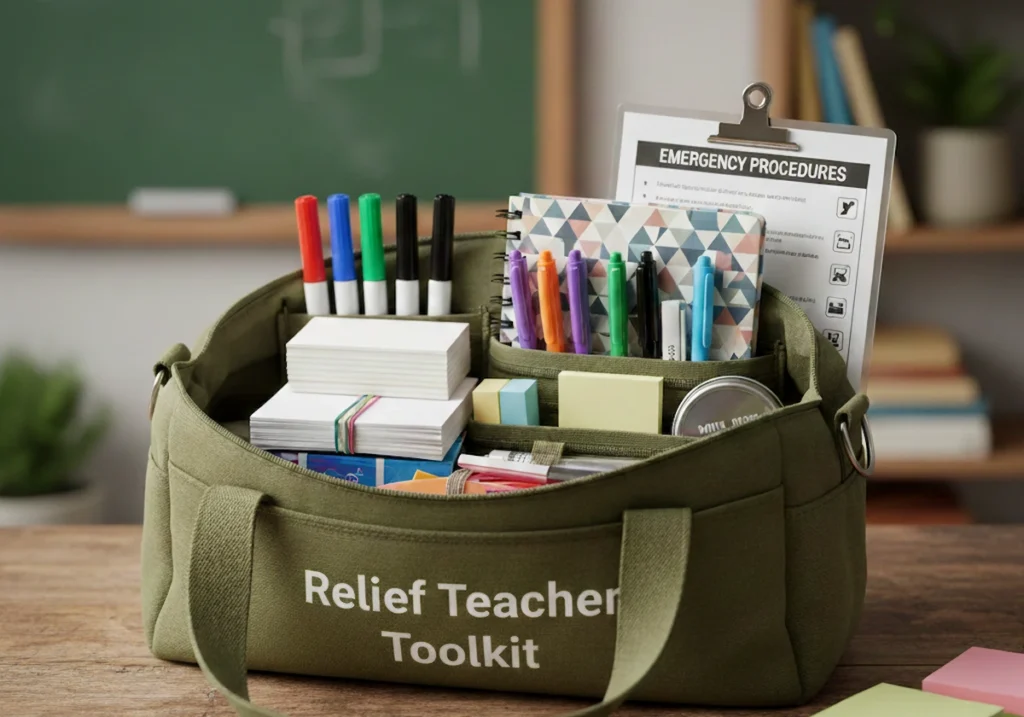
How to Build a Simple CRT Kit

Thinking about building a relief teacher toolkit, but not sure where to start? You’re not alone. Plenty of CRTs find themselves scrambling on short-notice days, wishing they had a few supplies ready to go.

In this article, we’ll walk you through the essentials. If you’re a relief teacher, all you really need is a simple, sorted bag with the right classroom bits and pieces. Nothing fancy, just practical.

Before we get into it, let’s make sure you know what a relief teacher toolkit actually is. That way, everything else will make more sense.

What Is a Relief Teacher Toolkit?

A relief teacher toolkit is a portable collection of supplies, activities, and tools you carry to every booking. But what does that actually look like in practice?

It usually includes teacher supplies like pens and markers, a few classroom management resources, and backup activities for different year levels. Having your own kit means you never have to rely fully on what the school provides.

What Is a Relief Teacher Toolkit?

Relief teachers who prepare this way tend to feel more in control from the moment they walk into any classroom.

CRT Essentials: Must-Have Classroom Supplies

Having the right classroom supplies means you spend less time scrambling and more time actually teaching. A few basics go a long way when you’re walking into an unfamiliar room.

Let’s break it down.

Basic Teacher Supplies for Any Classroom

Whiteboard markers, a small timer, sticky notes, and a lanyard are everyday essentials. Bring your own pens and highlighters because school supplies can be hit or miss.

From our time working with relief teachers, we’ve noticed this catches people out early on (and yes, we’ve all been there, rummaging through an empty stationery cupboard). A clipboard also helps when you need to move around the classroom or jot down notes at a student’s desk.

For example, a simple timer can keep students on track during group activities. It saves you from constantly watching the clock and lets kids manage their own focus.

Backup Activities Worth Packing

Laminated worksheets or games that suit multiple subjects save you in unplanned moments. And honestly, these moments happen more often than you’d think.

Brain breaks and quick puzzles help when the lesson runs short. Keep activities simple, so they work no worries without extra materials.

Here are a few ideas worth packing: word searches for early finishers, a quick maths game for middle primary, colouring sheets for younger kids, and a trivia quiz that works across subjects. The goal is to engage students without needing tech or fancy resources.

Classroom Management on Short Notice

Let’s be real here. Ever walked into a classroom with no lesson plan and thirty students staring at you?

It happens. And when it does, having a few classroom management tricks up your sleeve makes all the difference.

Tools That Help You Stay in Control

A small bell or chime is worth its weight in gold because it grabs attention without raising your voice. Reward stickers or stamps work well for younger kids and keep things positive.

Here are some tools worth keeping in your bag:

  • A small bell or chime for attention
  • Reward stickers or stamps for positive reinforcement
  • A visual timer app on your phone
  • A whistle for outdoor class or physical activity
  • A simple points tracker for group behaviour

When students can see a timer counting down, they know exactly how long they have. You don’t need to keep saying “five more minutes” over and over. The same goes for a points tracker. Kids can see where they stand, so they self-correct without you stepping in every time.

Quick Wins for Your First Day

Introduce yourself with a fun fact so students see you as approachable (trust us, “the relief teacher” gets old fast). Learn a few names early on because it builds connection and social interaction quickly.

Quick Wins for Your First Day

Set clear expectations in the first five minutes to avoid issues later. Something simple like, “Here’s how today will run,” helps the whole class settle. Good communication from the start saves you a lot of stress down the track.

New Teacher? How to Build Your First Kit

The good news is you don’t need to spend a fortune or pack a massive bag to feel prepared. Building your first kit won’t break the bank.

Here’s how to get started without the overwhelm.

Start Simple and Add Over Time

  • Begin with basics: Pens, sticky notes, and one or two backup activities are enough to start. You don’t need a full teaching arsenal on day one.
  • Add as you learn: Based on what we’ve seen firsthand, most new teachers figure out what they actually use after a few bookings. Then you can add supplies that suit your style.
  • Shop smart: Check discount stores like Kmart or Officeworks for affordable teacher supplies. You can also find free resources online to print and laminate.

Pro tip: Keep a running list on your phone of things you wish you had during a booking. It makes your next shopping trip way easier.

Staying Organised Between Bookings

  • Restock your bag: Do this after each day so your kit is always ready for the next call. It only takes a few minutes.
  • Use a digital calendar: This helps you track bookings and plan ahead. Some relief teachers set reminders the night before to double-check their kit.
  • Label your stuff: If you tend to leave things behind at school, labels save you money and stress (it happens more than you’d expect).

Pro tip: Keep a spare set of essentials in your car. On those last-minute calls, you’ll thank yourself.

Pack Light, Teach Confidently

Now that you know what to include, let’s talk about keeping your kit practical and easy to carry.

Here’s the thing, though. A heavy bag is not the goal because you still need to move around all day. You might be walking between classrooms, heading out for physical activity, or supervising in the playground.

Pack Light, Teach Confidently

Stick to items you actually use and swap things out here and there as your needs change. Over the school year, you’ll get a better sense of what works in your own classroom settings.

The right kit helps you save time and feel prepared without weighing you down. Teaching gets a lot easier when you’re not lugging around half a stationery store.

Start With What You Have

You don’t need the perfect kit on day one. Just a few reliable supplies that grow with you over time. Start small, see what works, and build from there.

Once your kit is sorted, the next step is finding consistent bookings. Partnering with a trusted agency like Francis Orr makes that part easier. They connect educators with schools across Australia and support you throughout your teaching career.

A good kit and the right support set you up for smoother days in any classroom. Now go get that bag sorted.

post

Finding Your Next Teaching Placement in Australia: What Agencies Look For

Finding teaching jobs in Australia through agencies comes down to three things: showing you’re qualified, proving you’re reliable through referees, and applying at the right time.

Education recruiters look for teachers with current state registration, clear evidence of classroom success, and references from principals or assistant principals who’ve directly supervised your work. When these elements are in place, you can move from the applicant pool to a school placement in weeks rather than months.

If you’ve been sending applications and getting silence or generic “we’ll keep you on file” replies, don’t worry. Agencies in Victoria and across Australia receive dozens of CVs every day and often skim each for no more than 30 seconds.

When your application doesn’t instantly show you meet the Australian Professional Standards for Teachers or highlight concrete achievements, it’s quickly set aside for candidates who present their experience more clearly.

This guide covers exactly what makes you stand out, how to format your CV for education sector recruiters, referee etiquette that gets you interviews, contract types to consider, and when to apply for the best opportunities.

What Makes You Stand Out in the Applicant Pool

Agencies look for teachers with diverse experience, current registration, and strong referees who can speak to your classroom performance.

You Stand Out in the Applicant Pool for teacher placement

When school recruiters call looking for qualified teachers to fill vacancies, agencies reach for candidates who tick specific boxes. Here’s what separates teachers who get contacted within days from those who sit in the applicant pool for weeks.

Experience in Early Childhood Through Secondary

Agencies value teachers who’ve worked across multiple year levels because it means you can fill more positions. Demonstrating your ability to switch between the Year 3 and Year 6 curriculum proves you’re ready for whatever school jobs come up.

What’s more, specialist skills in STEM, literacy intervention, or wellbeing make you even more attractive because primary and secondary teachers with niche expertise get matched faster.

Education Support Roles That Build Your Profile

Teacher aide or learning support experience shows you understand inclusive classroom practices beyond what’s taught in university courses.

Graduate teachers who’ve worked in education support roles have an edge because schools see them as ready for real classroom challenges. Also, extra-curricular involvement in sports, arts, or community programs demonstrates commitment that goes beyond contract hours.

For example, a teacher we placed ran a lunchtime coding club at their previous school, which helped them land a role at a tech-focused Melbourne school (and schools notice this more than you’d think).

Pro tip: Having your Victorian teacher registration current and accessible speeds up the entire placement process for both you and the agency.

CV Formatting That Education Recruiters Actually Read

CV Formatting

Education recruiters mostly look for chronological listings with specific achievements instead of generic duty descriptions. But even with that, we’ve seen CVs that look perfect on paper but get passed over because they’re missing one small detail that tells the agency you’re ready for immediate placement.

So let’s look at how to format your experience so it actually gets read.

Highlighting School Jobs: Vic and Interstate Experience

Recruiters scan CVs in under 30 seconds during busy hiring periods, so you need to make every line count.

Start by listing your teaching positions chronologically with school names, exact locations including suburbs, year levels taught, and key subject areas you’ve delivered. This format works consistently because agencies search their databases by location and year level when schools contact them with urgent vacancies.

From our work with hundreds of teachers across Victoria and NSW over the past decade, we’ve also seen that concrete achievements, such as “Increased Year 3 NAPLAN writing results by 15%”, lead to far more interview-coaching callbacks than generic claims about being a dedicated educator. Numbers clarify the impact you had, rather than simply describing your daily responsibilities.

Finally, include your registration details for Victoria and any other states you’re open to working in, especially if you’re considering permanent or contract roles outside your local area.

Which brings us to something equally important: who vouches for your teaching ability.

Referee Etiquette for Teaching Jobs in Australia

Agencies contact your referees early in the hiring process, often before they invite you for an interview. This means your referees can make or break your application before you even get a chance to speak with the agency. This section will clearly explain how to manage your references.

Getting Your Referee Details Right

Always ask permission before listing someone as a referee and confirm their current contact details are accurate (let’s be real, no one wants to chase down a busy principal for updated contact details at 5 pm on a Friday).

The worst part is when an agency calls a disconnected number, which immediately makes you look unprofessional.

Choosing Referees Who Carry Weight

Choose referees who’ve directly supervised your teaching, ideally principals or assistant principals from your most recent roles.

These are the people agencies want to hear from because they’ve observed you in the classroom and can speak to your management skills and how you handle difficult situations with parents or students.

Preparing Your Referees for Agency Calls

Brief your referees on the types of roles you’re applying for so they can speak to what agencies need. When you give them this context, they’re able to highlight relevant experience when questions come up about your capabilities.

Understanding Fixed-Term vs Full-Time Opportunities

Once your application is strong and your referees are briefed, the next step is deciding which type of contract best suits your career goals.

What does this mean for you in particular, though? Well, it depends on where you are in your career and how much flexibility you want. Here’s how these contract types differ across Australia.

School Jobs Across Different States

Fixed-term contracts usually run for one to four terms. They are a good option for teachers who want to try a new location before committing long-term. A lot of graduate teachers also start with fixed-term roles, because they give you a natural exit point if the placement isn’t working out.

Similarly, permanent full-time roles offer job security, salary progression, and more chances for professional development. You’ll also get access to paid parental leave and long service leave that fixed-term contracts don’t always include.

These roles come with legal protections, so schools must have legitimate grounds to end your employment rather than simply opting not to renew a contract.

Quick tip: Each state has different employment structures. Victoria and New South Wales generally offer more permanent positions than Queensland or South Australia. The Northern Territory and Western Australia are somewhere in the middle.

When to Apply: Contract Timing in the Education Sector

The best times to apply are September for Term 1 positions and March for mid-year roles. Apply at these peak periods and you’ll have more options, better negotiating power, and faster placement turnaround.

Follow this section to understand when to register with agencies for the best opportunities.

Financial Incentives in the Northern Territory

Term 4 is the main hiring season for Term 1. Agencies process large numbers of applications from October through December, and schools move quickly because they want staffing confirmed before Christmas. If you register with an agency in September, you are ahead of the rush and have a wider range of school jobs available.

Mid-year roles open from April when teachers resign or take leave for personal reasons. These positions usually fill within a week because schools need someone who can start immediately.

Northern Territory schools also provide financial incentives for teachers in remote and regional areas. These include relocation allowances, housing subsidies, and retention bonuses. For example, a teacher we placed in Alice Springs received eight thousand dollars in relocation assistance along with subsidised accommodation for their first year.

What Ongoing Support Looks Like After Placement

ongoing support after teacher placement

Good agencies check in during your first week, mediate contract issues, and help with career advice throughout your placement. But since a few agencies disappear the moment you sign the contract, it’s good to know what to expect.

Quality agencies check in during your first week to ensure the school environment matches what was discussed. They’ll likely want to know if the year level changed, if behaviour management challenges weren’t mentioned, or if the principal’s leadership style doesn’t match your expectations.

They should also mediate any contract issues, clarify pay rates that seem incorrect, and answer questions about entitlements. The agencies that keep teachers long-term are the ones that treat you as more than just a placement number on their books.

Get Hired Faster in Education Jobs

You’ve got the knowledge about what agencies look for and how to position yourself effectively. Now it’s time to put these tips into action.

Start by registering with agencies that specialise in education rather than general recruitment firms. And make sure your CV and referee details are updated before the peak hiring periods in September or March.

It also helps to research schools and regions before your first agency call. If you can say something like, “I am interested in the Mornington Peninsula because I want a coastal lifestyle within an hour of Melbourne,” the consultant can focus on specific schools that align with your goals.

If you’re ready to find the right teaching placement, register with Francis Orr. We’ll connect you with education jobs across Australia and provide personalised support throughout your placement journey.