

Thinking about building a relief teacher toolkit, but not sure where to start? You’re not alone. Plenty of CRTs find themselves scrambling on short-notice days, wishing they had a few supplies ready to go.
In this article, we’ll walk you through the essentials. If you’re a relief teacher, all you really need is a simple, sorted bag with the right classroom bits and pieces. Nothing fancy, just practical.
Before we get into it, let’s make sure you know what a relief teacher toolkit actually is. That way, everything else will make more sense.
What Is a Relief Teacher Toolkit?
A relief teacher toolkit is a portable collection of supplies, activities, and tools you carry to every booking. But what does that actually look like in practice?
It usually includes teacher supplies like pens and markers, a few classroom management resources, and backup activities for different year levels. Having your own kit means you never have to rely fully on what the school provides.
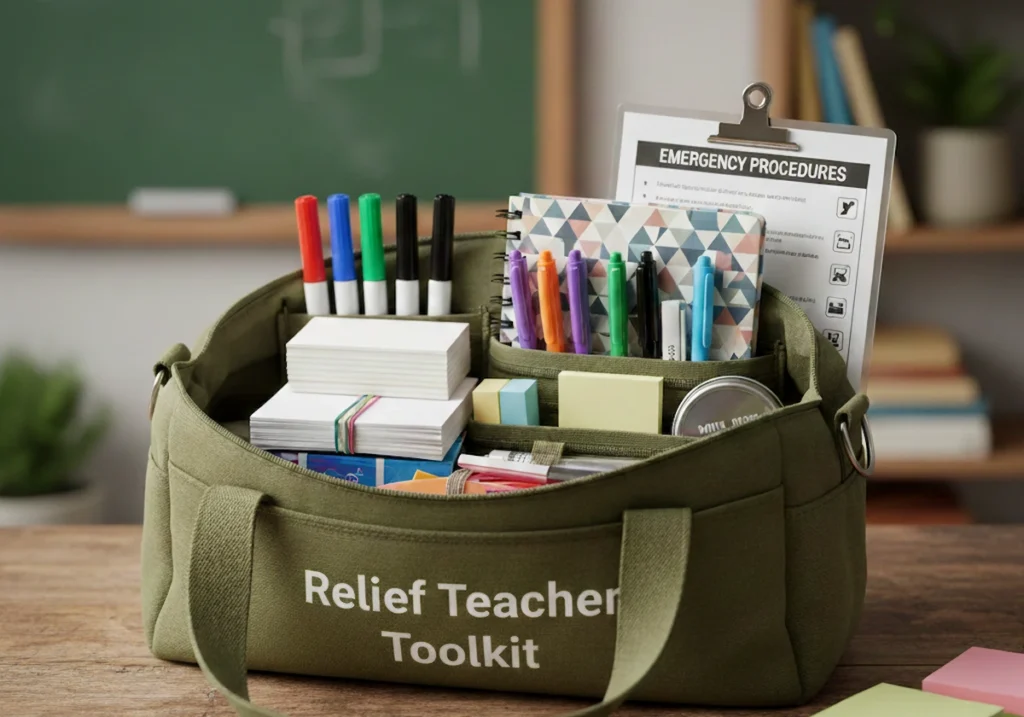
Relief teachers who prepare this way tend to feel more in control from the moment they walk into any classroom.
CRT Essentials: Must-Have Classroom Supplies
Having the right classroom supplies means you spend less time scrambling and more time actually teaching. A few basics go a long way when you’re walking into an unfamiliar room.
Let’s break it down.
Basic Teacher Supplies for Any Classroom
Whiteboard markers, a small timer, sticky notes, and a lanyard are everyday essentials. Bring your own pens and highlighters because school supplies can be hit or miss.
From our time working with relief teachers, we’ve noticed this catches people out early on (and yes, we’ve all been there, rummaging through an empty stationery cupboard). A clipboard also helps when you need to move around the classroom or jot down notes at a student’s desk.
For example, a simple timer can keep students on track during group activities. It saves you from constantly watching the clock and lets kids manage their own focus.
Backup Activities Worth Packing
Laminated worksheets or games that suit multiple subjects save you in unplanned moments. And honestly, these moments happen more often than you’d think.
Brain breaks and quick puzzles help when the lesson runs short. Keep activities simple, so they work no worries without extra materials.
Here are a few ideas worth packing: word searches for early finishers, a quick maths game for middle primary, colouring sheets for younger kids, and a trivia quiz that works across subjects. The goal is to engage students without needing tech or fancy resources.
Classroom Management on Short Notice
Let’s be real here. Ever walked into a classroom with no lesson plan and thirty students staring at you?
It happens. And when it does, having a few classroom management tricks up your sleeve makes all the difference.
Tools That Help You Stay in Control
A small bell or chime is worth its weight in gold because it grabs attention without raising your voice. Reward stickers or stamps work well for younger kids and keep things positive.
Here are some tools worth keeping in your bag:
- A small bell or chime for attention
- Reward stickers or stamps for positive reinforcement
- A visual timer app on your phone
- A whistle for outdoor class or physical activity
- A simple points tracker for group behaviour
When students can see a timer counting down, they know exactly how long they have. You don’t need to keep saying “five more minutes” over and over. The same goes for a points tracker. Kids can see where they stand, so they self-correct without you stepping in every time.
Quick Wins for Your First Day
Introduce yourself with a fun fact so students see you as approachable (trust us, “the relief teacher” gets old fast). Learn a few names early on because it builds connection and social interaction quickly.

Set clear expectations in the first five minutes to avoid issues later. Something simple like, “Here’s how today will run,” helps the whole class settle. Good communication from the start saves you a lot of stress down the track.
New Teacher? How to Build Your First Kit
The good news is you don’t need to spend a fortune or pack a massive bag to feel prepared. Building your first kit won’t break the bank.
Here’s how to get started without the overwhelm.
Start Simple and Add Over Time
- Begin with basics: Pens, sticky notes, and one or two backup activities are enough to start. You don’t need a full teaching arsenal on day one.
- Add as you learn: Based on what we’ve seen firsthand, most new teachers figure out what they actually use after a few bookings. Then you can add supplies that suit your style.
- Shop smart: Check discount stores like Kmart or Officeworks for affordable teacher supplies. You can also find free resources online to print and laminate.
Pro tip: Keep a running list on your phone of things you wish you had during a booking. It makes your next shopping trip way easier.
Staying Organised Between Bookings
- Restock your bag: Do this after each day so your kit is always ready for the next call. It only takes a few minutes.
- Use a digital calendar: This helps you track bookings and plan ahead. Some relief teachers set reminders the night before to double-check their kit.
- Label your stuff: If you tend to leave things behind at school, labels save you money and stress (it happens more than you’d expect).
Pro tip: Keep a spare set of essentials in your car. On those last-minute calls, you’ll thank yourself.
Pack Light, Teach Confidently
Now that you know what to include, let’s talk about keeping your kit practical and easy to carry.
Here’s the thing, though. A heavy bag is not the goal because you still need to move around all day. You might be walking between classrooms, heading out for physical activity, or supervising in the playground.

Stick to items you actually use and swap things out here and there as your needs change. Over the school year, you’ll get a better sense of what works in your own classroom settings.
The right kit helps you save time and feel prepared without weighing you down. Teaching gets a lot easier when you’re not lugging around half a stationery store.
Start With What You Have
You don’t need the perfect kit on day one. Just a few reliable supplies that grow with you over time. Start small, see what works, and build from there.
Once your kit is sorted, the next step is finding consistent bookings. Partnering with a trusted agency like Francis Orr makes that part easier. They connect educators with schools across Australia and support you throughout your teaching career.
A good kit and the right support set you up for smoother days in any classroom. Now go get that bag sorted.