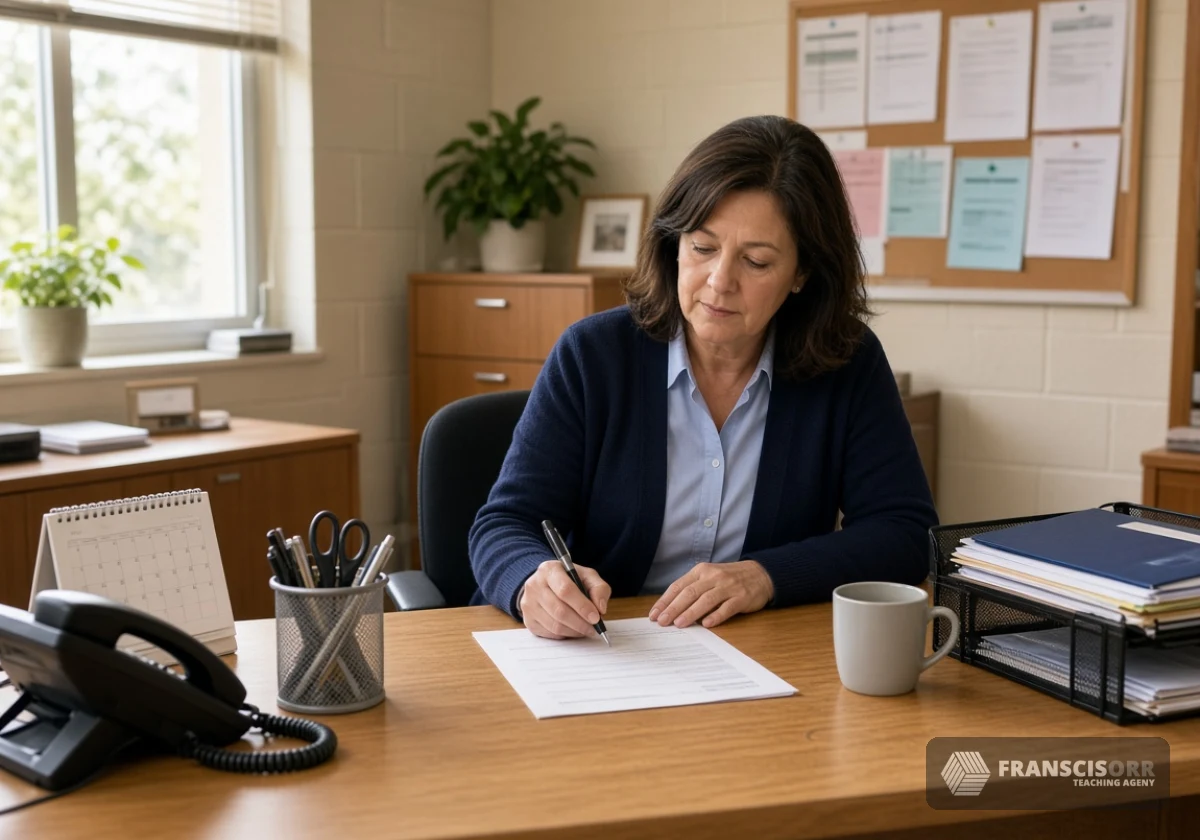
A short written handover in the first five minutes gives a relief teacher the names, routines and safety details that stop many difficult days before they start. Those few minutes decide whether the day is spent teaching or chasing basic answers.
Much of the trouble on a relief day grows from small gaps, like a missing seating plan or an unknown allergy. At Francis Orr, we know how quickly one missing detail can unsettle a class.
This guide sets out a one-page relief teacher handover checklist and shows how a casual teacher handover differs from a school relief staff induction. It also explains how a substitute teacher information sheet saves rebuilding notes.
Read on and set yours up today.
Why Do the First Five Minutes of a Relief Teacher Handover Carry So Much Weight?

Before students arrive, the relief teacher has one chance to read the handover and prepare. Once the bell rings, questions about student names, classroom routines or room locations may have to wait until recess. Because by then, students may already have noticed when their teacher seems unsure of what to do.
That uncertainty can make classroom management harder, especially when students realise the relief teacher doesn’t know their names or routines. Without this information, it’s harder to address behaviour confidently or keep the class on track. A short, clear handover gives the relief teacher enough background to start the day with confidence, even when they’re new to the school.
Relief teachers already bring teaching qualifications and classroom experience. What they need is local information about the students, school routines and current lessons. Five minutes is enough to read a single page and ask two important questions about the class. These should cover which students need extra attention, who has a medical plan and where the class has reached in the lesson.
The timing also protects nearby staff. When the relief teacher knows the duty roster and the office extension, the teacher next door doesn’t lose their own lesson answering knocks. You’ve probably seen that domino effect on a busy Monday, and a short handover is the simplest way to stop it.
Building a Relief Teacher Handover Checklist That Fits on One Page
That is what the checklist prevents. A single page forces the classroom teacher to choose only what the next adult needs before recess. That limit is why a one-page relief teacher handover checklist gets read when a folder doesn’t. Five items earn a spot, and each one answers a question that would otherwise interrupt a lesson.
Student Roll and Seating Plan
A current roll and seating plan let the relief teacher use names from the first minute. Names give instant authority, because a student called by name usually stops what they’re doing.
Since students may change seats, update the plan regularly (students rarely miss a chance for a seat-swap prank). Also, mark any known absences on the roll before leaving. This helps the relief teacher check attendance and notice anyone missing when the class returns after recess.
Medical Alerts and Emergency Procedures
List each student with a medical plan, their condition, the action required and where their medication is kept. Victorian Department of Education guidance on anaphylaxis communication plans requires schools to inform casual relief staff about at-risk students and their role in an emergency. Having these details ready helps the relief teacher respond quickly when a student needs medical attention.
The handover should also explain the school’s evacuation route and lockdown signal, so the relief teacher knows how to respond when an alarm sounds. Adding a photo beside each student’s medical details makes identification faster during an emergency, especially when the teacher is unfamiliar with the class.
Behaviour Plans and Student Support Needs
Include any student with a behaviour plan and explain which strategy works best for them. For example, a note like “give Sam a classroom job when restless” gives the relief teacher a clear way to manage behaviour without having to work it out during the lesson.
The handover should also cover other support needs, such as an aide’s availability or extra time for students who need it. With that information, the relief teacher can plan the lesson and give each student the right support.
Keep these notes focused on practical instructions rather than medical or behavioural diagnoses, which should stay in the confidential file.
Timetable, Bell Times and Playground Duties
Include the day’s timetable, with bell times, room changes and specialist lessons. These details help the relief teacher follow the school schedule and take each class to the right place. A missing library session, for instance, could leave the specialist waiting while the class heads to the wrong room.
Playground duties belong here as well, with the area, the time and who to call if a swap happens. And since duties can change, check these details against the current roster before leaving.
Lesson Plans and Where the Teaching Resources Live
Keep each lesson plan short, with the learning goal, steps and a backup activity. This gives the relief teacher another option if something goes wrong, such as the projector failing during a lesson.
Next, include clear instructions for finding the resources needed to teach each lesson. List where to find worksheets and class readers, along with any laptop access details. Without this information, a locked trolley or missing password could stop the lesson from going ahead.
For extra activities, our relief teacher toolkit offers ready-made options you can print in advance. Store a copy in the desk drawer so the relief teacher has something to use if an unexpected absence leaves a gap in the plans.

Casual Teacher Handover vs School Relief Staff Induction: What Each One Covers
With the page itself sorted, the next question is what sits outside it. Separating the two keeps the five-minute handover short while nothing important gets dropped, and the table below shows where each one fits.
| Factor | Casual Teacher Handover | School Relief Staff Induction |
|---|---|---|
| When it happens | First five minutes of each relief day | Once, on a relief teacher’s first visit |
| What it covers | Names, medical alerts, timetable, lessons | Site map, sign-in, IT log-ins, child safety policy |
| Who runs it | The classroom teacher or team leader | The front office or a nominated staff member |
| What it prevents | A rough lesson or a missed medical need | The same policy questions on every visit |
The last row highlights why both steps are important. When relief teachers have to ask about sign-in or IT access during every visit, they may not have received a proper induction. Arrange one session with the front office to cover these details. This leaves the daily handover free to focus on the class, its lessons and any immediate needs.
A Substitute Teacher Information Sheet Keeps Everything in One Place for the Next Relief Day
The stable details need their own home. Separate daily classroom updates from the general school information that stays the same each term. A substitute teacher information sheet holds the stable details, which leaves the daily handover page for changes and lesson updates.
The NSW Department of Education’s relief teaching advice asks relief teachers to leave detailed notes about the classes they taught and any relevant student information. Keep these notes with the daily handover so the classroom teacher can find everything in one document.
Many staffrooms learn the hard way that a sheet goes stale when nobody owns it. You’ll get far more out of yours if one person checks it at the start of each term, and a few habits keep it current between checks:
- Last-Checked Date: A review date at the top helps staff see when the information was last confirmed. Update it whenever you change a detail, not just at the termly review. If the date is older than four weeks, treat the sheet as potentially outdated and verify the key items before handing it over.
- Spare Office Copy: Keep a second copy at the front office in case the classroom one goes missing. Assign one person, usually the office manager, to swap in an updated version whenever the classroom teacher prints a new one. A dated footer on both copies makes it easy to confirm they match.
- Shared Digital Version: Store the file in the school’s management system or shared drive so staff can update it as details change. Use a format the relief teacher can open without special software, such as a PDF or a shared Google Doc. Restrict editing access to classroom teachers and the office manager so changes stay controlled.
- End-of-Day Notes: Leave space for the relief teacher to record completed lessons, unfinished tasks, and any incidents. Prompt them with three headings: ‘Completed,’ ‘To finish next lesson,’ and ‘Incidents or concerns.’ Those headings make the notes usable for the classroom teacher returning the next day.
- Termly Review: Recheck every detail at the beginning of each term, particularly student medical plans, staff rosters, and room allocations. Cross-reference the sheet against the school’s current records to catch any changes made during the break. Sign and date the review so the next person who reads it knows it has been verified.
A current information sheet means the daily handover page only needs to cover what changed overnight: today’s lessons, any new absences, and the relief teacher’s specific duties. That split keeps the five-minute handover short enough to read before the bell.

Start Tomorrow’s Handover Before the Bell Goes
A short written handover gives the relief teacher essential details before students arrive, including names, routines and safety information. Draft yours this afternoon and test it on a colleague who doesn’t know your class. Anything they ask about belongs on the page.
Francis Orr shares practical guidance for relief teachers and the schools that book them. Contact Francis Orr to talk through your handover routine and make your next relief day calmer for everyone.