

Landing a teaching role in Australia is competitive. And if you have been relying on the same rehearsed answers most candidates walk in with, chances are the panel has heard it all before.
The truth is, schools are not just looking for someone with the right qualifications on paper. They want to see how you think, how you handle a room, and how well you understand the community you are stepping into. That is harder to prepare for, but it is not impossible.
This guide covers teacher interview tips that most panels rarely see. You’ll get to know what panels genuinely look for, how to present your classroom experience, and what separates a strong application from a forgettable one.
So without further ado, let’s get into it.
What Schools Look for Beyond the Standard Interview Questions
Schools look for self-awareness, cultural fit, and genuine preparation just as much as qualifications. Most applicants come in having rehearsed the obvious questions like “tell us about yourself” or “how do you handle a difficult classroom.” What panels are watching for goes quite a bit further.
By the time you’re sitting across from a principal, they’ve already shortlisted people with similar credentials. At that point, qualifications stop being the deciding factor.
Character, contextual knowledge, and genuine curiosity take over. So how you reflect on your own practice tells a panel far more than a polished answer ever could. The same goes for how well you understand the school you’re applying to.
And here’s the thing: school recruiters notice when a candidate has done their homework. The ones who leave a lasting impression aren’t always the most experienced candidate there. They’re the ones who clearly wanted that particular role, at that exact school, for a real reason.
In the long run, panels remember those candidates well after the interview wraps up.
How to Talk About Your Teaching Philosophy Without Sounding Scripted

Most educators have a teaching philosophy, but only a few can explain it clearly under pressure. Here’s how to do it in a way that actually sticks.
Use a Real Classroom Moment Rather than a Rehearsed Answer
Ever sat in an interview and watched a candidate recite what sounds like a Wikipedia entry on teaching philosophy? Most selectors have heard that too.
Pick one moment from your teaching career instead. Maybe a student struggled with a concept for weeks, and you switched your entire approach to help them grasp it. That kind of example opens up a much richer conversation about how you think and adapt.
Bottom Line: Broad statements about student-centred learning leave selectors with nothing concrete to assess. Whereas a real story gives them something to remember you by.
Showing You Understand the School’s Context
A strong story alone won’t carry the whole interview. Referencing relevant curriculum frameworks in your answers, such as the Victorian Curriculum or AITSL standards, shows selectors you know the system. It also reassures them you won’t need time to find your footing in the role.
Beyond that, acknowledging the school’s community context strengthens that impression. A primary school in regional Victoria serves a very different population to one in inner Melbourne. Educators who name that distinction show contextual awareness (panels pick this up well before the first question is done).
And as experienced teachers know, most other applicants simply don’t think to do this.
Adapting Your Approach for Early Childhood and Education Support Roles
Interviews for early childhood teaching positions shift the focus toward developmental frameworks and how well you read a young learner’s individual needs. The lesson plan matters less than your ability to respond in the moment.
Education support class roles bring a different set of considerations. You’ll need to explain how you collaborate with the lead educator and adjust your support based on each student’s needs.
While you’re at it, frame your examples around the specific age group and context you’re going for. This way, your answers speak to this role specifically, and selectors can see you’ve thought carefully about what this position actually involves.
So once you’ve got your philosophy clear, the next step is figuring out what gives certain applicants an edge when the pool is full of equally prepared candidates.
Why Some Candidates Stand Out in a Crowded Applicant Pool
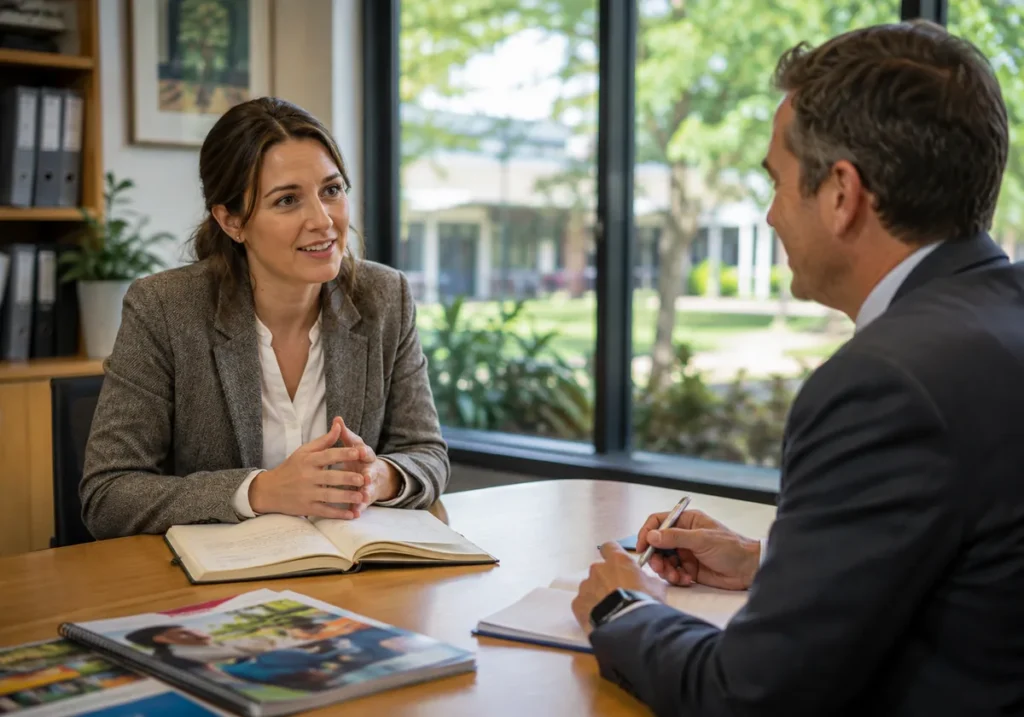
Believe it or not, knowing the school wins you the role. Applicants who arrive having researched a school’s programs, priorities, and community walk in with something most others don’t: a reason for being there.
One of our candidates, Sarah, is a good example. She found out a Geelong primary school had recently launched a wellbeing program and asked the principal about it at the close of her interview. That one question secured her the role over people with significantly more years in the classroom.
Educators who show genuine curiosity about a school, rather than sending the same application everywhere, consistently secure more interviews and stronger offers.
So what do hiring panels respond to most? It’s these three things:
- Research Before You Go In: Look into the school’s recent news, programs, and student community before your interview. Arriving with that context gives the principal a concrete reason to remember your name even after a long day of interviews.
- Ask Informed Questions: Don’t leave without asking something specific. “How has your wellbeing program landed with students?” signals real commitment. “What’s the culture like here?” tells the selector you ran out of things to say. One opens a conversation. The other closes it.
- Connect Your Background to the Role: You’ve got a teaching career behind you. So use it. Draw on examples that speak directly to what this institution is working through right now, and frame them around the role (not just your experience in general).
Nine times out of ten, the rushed hiring decisions schools later regret come from overlooking these signals early in the recruitment process.
Professional Growth Questions that Catch Teachers Off Guard
Teachers who speak confidently about their professional development send a clear message: they won’t stop improving once they’ve settled in. Yet this is the area most educators leave completely unprepared.
Since most principals look for a long-term investment in their school staff, a candidate who actively pursues growth gives them a much stronger reason to choose them.
The most common version of this question sounds deceptively easy: “How have you grown as an educator recently?” Without something real to point to, candidates tend to give vague answers about being open to feedback (and it shows, every time). A selector who has interviewed twenty people that week has heard it before.
What works instead is a specific moment. A training program that changed how you structure lessons, for example. Or a mentor who challenged your approach to student behaviour and prompted you to rethink it entirely. This kind of answer demonstrates self-awareness in a way that no rehearsed response can come close to.
Over time, educators who take ownership of their growth build stronger careers. Selectors know this, and they ask about it deliberately.
Fixed Term or Ongoing? What to Know Before You Apply for Teaching Roles

Based on what we see at Francis Orr, candidates who understand contract types before their interview answer questions about availability and career plans with far more clarity. But this is something many educators overlook entirely.
Let’s walk through what you need to know.
How Fixed Term Contracts Work in Government Schools
A fixed term contract has a set end date, but that doesn’t mean it leads nowhere (a foot in the door is still a foot in the door). Many educators use these positions to gain exposure across different schools before securing an ongoing role.
The table below compares the three main contract types:
| Contract Type | Duration | Renewal Possible? | Best For |
Fixed Term | Set end date | Yes, but not guaranteed | Teachers re-entering the workforce or building experience |
Ongoing | No end date | N/A | Established educators seeking long-term school staff roles |
Casual/Relief | Day by day | N/A | Those gaining experience across multiple schools |
When you understand these conditions beforehand, the principal can see you’ve read the full position description rather than just skimmed the salary and location.
Job Search: Where to Find Government School Vacancies Online
Several platforms list government school vacancies across Australia. The Australian Government’s job search portal covers roles throughout all states and territories. State-specific education department portals go further and let you filter by school type, location, and classification.
For example, School Jobs Vic lists every Victorian government school vacancy in one place, while the Western Australia Department of Education covers all government school roles across WA. You can search by location, contract type, and classification on either platform to find roles that genuinely match your preferences.
Pro Tip: Set up job alerts on whichever platform covers your state. New positions appear regularly, and an alert keeps you ahead of the field without checking back manually every day.
Education Support Positions
If you’ve been overlooking education support roles in your job search, you may be missing a reliable entry point into school communities nationwide. These positions span a broad range of settings, from early childhood programs to specialist facilities, and they attract candidates from varied professional backgrounds.
They’re a safe bet for educators transitioning into teaching or returning after a career break. After all, working alongside lead teachers builds practical classroom knowledge that textbooks don’t cover.
On top of that, supporting individual students gives you a direct window into how a school’s education support class operates from day to day.
Ready to Walk Into Your Next Interview With Confidence?
As you’ve seen throughout this guide, teacher interviews are rarely won on qualifications alone.
The educators who secure the roles they’re after do their homework on the school and speak honestly about their growth. They also show up knowing exactly what the position involves, and that combination is genuinely hard to overlook.
And none of that happens by accident. It takes groundwork, honest self-reflection, and the confidence to have a real conversation rather than recite a script.
At Francis Orr, we work with educators at every stage of their career, whether they’re just starting out or experienced professionals ready for a new challenge. Visit francisorr.com today for further information on how we can help you find the right teaching role.